


Download PDF Brochure
An Analogy

Factors Responsible for the Generation of Reactive Oxygen Species
ROS (Reactive Oxygen Species) could be equated to human adolescents that have both genetic and environmental influence; full of energy and communication potential. Though in larger groups have capability to harm themselves and their surrounding.

Cellular Damage:
Phospholipid chain broken & Membrane disruption leading to electrolyte leakage
Protein Damage:
Disruption of protein molecule structure, Enzyme inactivation, & Increased protein break down
Genetic Damage:
Disruption of DNA molecule structure & Error in coded message

Antioxidants
Antioxidants are the role models and guardians of the adolescent groups. Antioxidants are able to convey positive messages, reduce instability, dissipate harmful tendencies and direct the energy into positive growth.
An antioxidant is a substance that balances the oxidation process, capable of counteracting the excessive effects of oxidation in plants
CROP+ influences gene expression


How CROP+ influences maize seedlings’ genes activation
CROP+ altered gene expression for 1,164 genes involved in key plant
- Photosynthesis processes: has 33 genes with influenced expression
- Chloroplast organisation: has 20 genes with increased expression
- Gene ontology: (molecular function / cellular component / biological processes) – total of 58 (3%) of 1,980 genes enriched in shoots & roots
- Carbohydrate metabolism: a total of 253 genes influenced in shoots & roots
- Lipid metabolic process: a total of 145 genes influenced in roots & shoots
- Oxidation-reduction: a total of 713 genes influenced, of which 183 (26%) in shoots and 530 (74%) in roots
The Trials

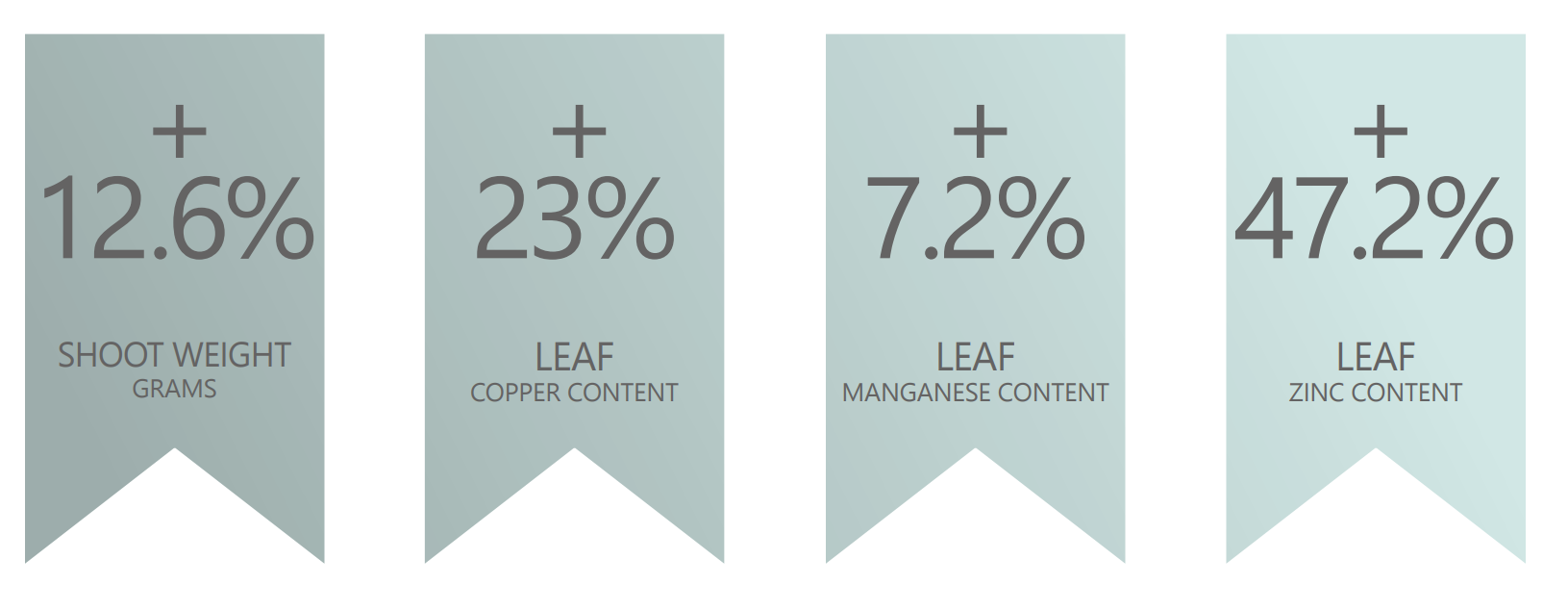
Lab Data*
Demonstrating bio stimulant effect on plant and improved nutrient use efficiency. CROP+ applied at 1l/ha at 4/5 leaf stage of winter wheat. Results at 21 days after application.
*Sponsored trial conducted 2020 by Dr S. Rossall, Plant Sciences Consultant, UK
Field data*
Demonstrating bio stimulant effect on plant through increased grain weight, plant count and ear count leading to increased grain yield. CROP+ applied to winter wheat at 0.6 lt/ha @ BBCH30.
*Source trial conducted 2021 by Velcourt Ltd, UK


Overcoming Abiotic stress
Improves flavour by increasing the soluble solids/acidity index on tomato fruits, even under water stress. Improved quality of taste and sweetness to tomato. Improvement in quality retained 9 days post-harvest
To determine the influence of cold stress; and the effect of use the bio-stimulant CROP+ had on chemical characteristics, two tomato fruit plants were subjected to low temperature stress. The plant on the right was treated with the Bio-Stimulant CROP+. 2 weekly product applications were made to the tomato plant on the right, then both plants were exposed to –5 degrees for periods of 2 hours.
It was successfully demonstrated that the anti-oxidant technology in CROP+ reduced abiotic stress.
BIOSOLUTIONS AWARD ITALY 2023 | Yellow Kiwi – Variety G3
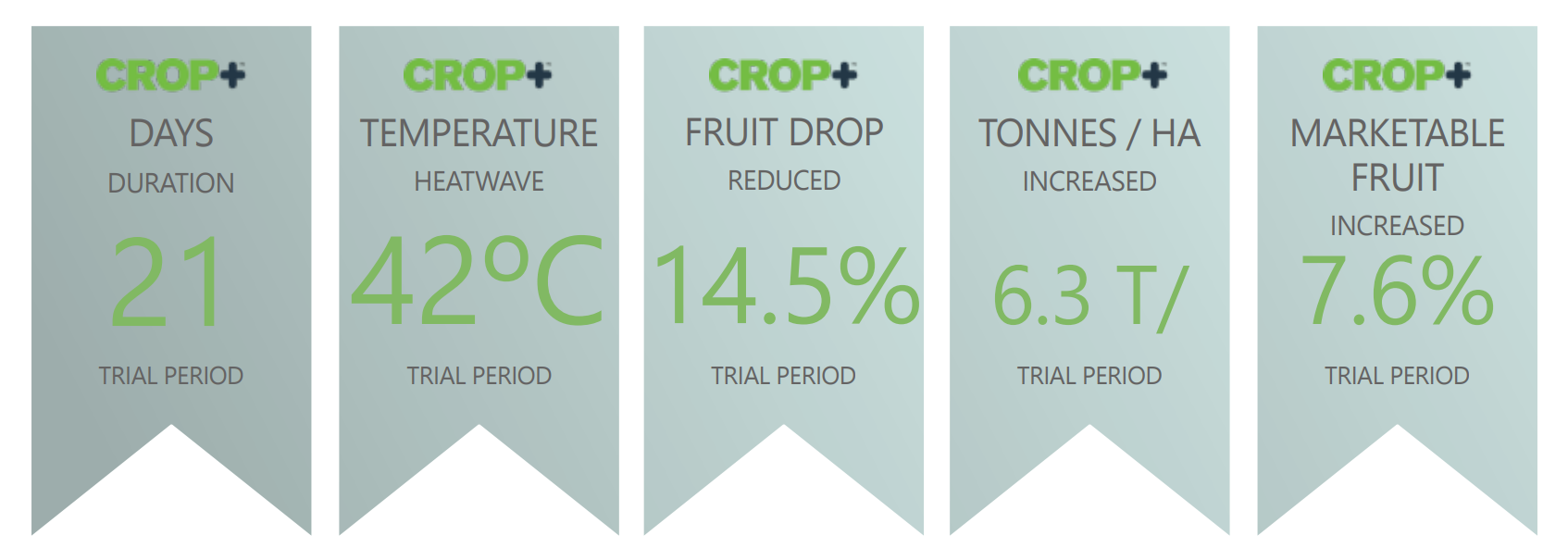
The trial period was 21 days. Results were compared to nontreated crops
The 21-day duration of the trial was conducted through a heatwave
The marketable fruit was increased by 7.6%, when compared to the untreated crops
Fruit drop was successfully reduced by 14.5%, which was compared to untreated crops in the same trial.
Yield was increased by 6.3 tonnes per hectare when compared to the untreated crop in the trial

The Conclusion

- Enhanced nutrient uptake
- Root and shoot growth showed statistically significant increases
- Improved yield and crop quality

The Reasoning

- Upregulation of key genes improves the plants nutrient use efficiency and overall efficiency of its metabolic systems
- Antioxidant and increased gene activity reduces the negative effect on the plant’s growth from abiotic stress, especially effects from drought, heat and cold
- Combination of the two modes of action helps the plant get closer to its genetic potential